
Fields in Webster County Property Tax Records
Start with the assessor's card. That record holds the valuation, the parcel number, and the owner entry, and it is the anchor for everything else in a Webster County property search. It is not the tax bill. Keep the land value and building value separate, note the tax class and the year, and then take the parcel to the Sheriff, who sends out the bill and collects on it.
| Field | What It Shows | Where |
|---|---|---|
| Owner, mailing, situs | Who appears on the tax card, where notices go, and where the parcel sits. | Webster County Assessor, IAS |
| Market appraisal | Annual market value, with land and building amounts shown separately. | Webster County Assessor |
| Assessed amount | Appraised value multiplied by the published 60 percent assessment level. | Webster County Assessor |
| Tax class and parcel ID | Classification and district-map-parcel-suffix key for the account. | Webster County Assessor |
| Exemption entry | Any approved relief recorded on the local account; confirm current eligibility and filing steps. | Webster County Assessor |
| Bill, payment, delinquency | Amount due and collection status, which are distinct from assessed value. | Webster County Sheriff |
Webster County math is simple once you see it. Appraised value times 60 percent gives the assessed value. The assessed value times the levy rate gives the tax. A bill also reflects the levy and any adjustments tied to the account. So an appraisal by itself cannot tell you whether a tax bill is paid or delinquent. The IAS parcel detail shows the tax class and appraisal figures. The Sheriff's office handles collection.
Webster County’s Annual Assessment Cycle
The Assessor must keep market values current every year. State rules also require a visit to real estate at least once every three years. Locally, land and personal-property books are finished by January 30. They go to the Board of Equalization and Review by February 1. Those dates mark the annual rhythm of Webster County property records, though a current notice is the place to confirm review sessions and any calendar changes.
One timing rule can surprise a new owner. The assessor's own guidance puts it plainly: "2022 taxes are what you owned July 1, 2021." That is an assessment-year rule. It does not mean the name on a current deed and the name on the tax roll must always match, since a sale after the July 1 reference date may simply show up in the next cycle.
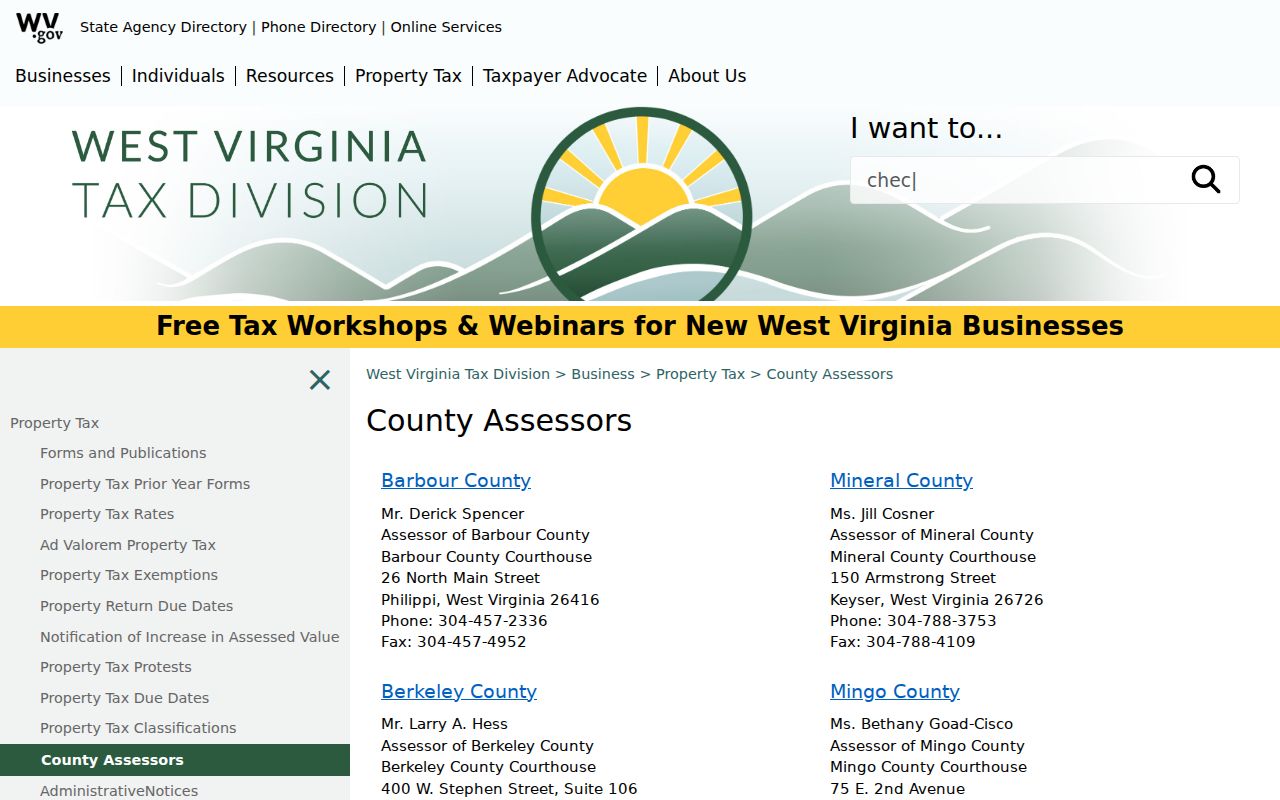
The West Virginia assessor directory lists the Webster County Assessor and connects the county’s local appraisal work to the state tax system.
Tax Class and Relief on Webster County Accounts
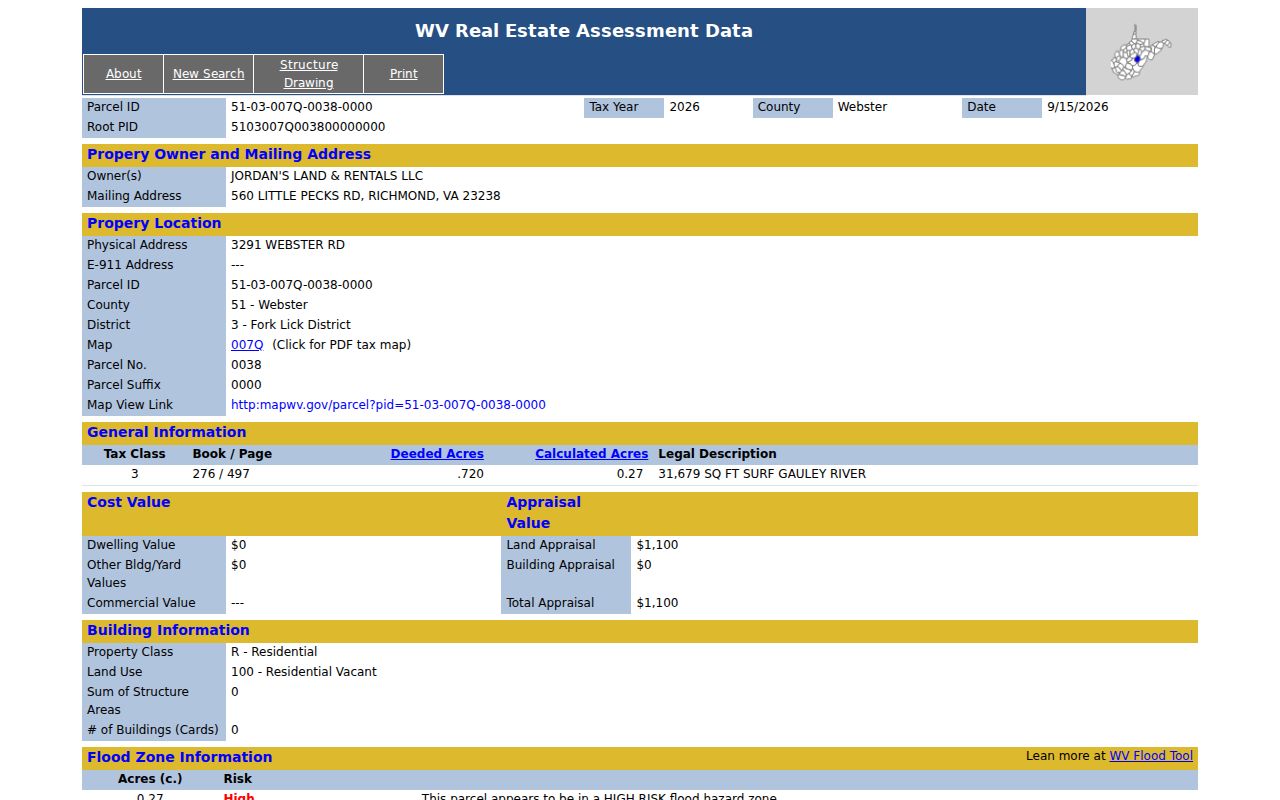
The IAS detail lists a tax class for each account. But the county publishes no class guide and no complete list of exemption amounts or application steps. The local assessor site does link to exemption guidance and SmartFile. Before estimating a bill, ask the Assessor which class applies. Also ask whether an exemption is active on the account. Never infer one from an owner's age, the use of the property, or a mailing address.
The same caution applies to the taxable amount. The 60 percent formula is public. Yet a tax bill also folds in levies and account details. When you compare deed records and appraisal entries across years, save the parcel number and tax year. Save the land value, building value, total appraisal, and any exemption entry too.
A tax class is a label on the county card. It is not a plain-language summary of every rule that moves a bill. Webster County offers no full class table, no definitive exemption checklist, and no published relief amount. Ask the Assessor which class and exemption entries apply to the parcel. Ask what supporting document is on file. Guessing from a mailing location, an owner's name, or the apparent use of a building invites error.
July 1 and Webster County Property Tax Records
The local July 1 example explains why the owner name on a tax card may trail a sale. State law requires the County Clerk to send a title-transfer list to the Assessor by the tenth day of each month under W. Va. Code §11-4-8. The research did not locate a published average processing lag. If a recent deed and IAS owner field differ, check the recording date and tax year before treating the mismatch as an error.
For a name correction, the assessor says a legal document such as a deed or will must be filed with the County Clerk. A phone request alone does not convey property or replace the instrument. The current deed and the tax roll are related records, but they are built for different purposes.
The monthly transfer list is a handoff requirement, not a promise that a public card will change on the same day the deed is recorded. A recent buyer should keep the closing deed and check the July 1 assessment snapshot that applies to the tax year in question. When a bill still carries a former name, ask the Assessor whether the transfer reached the roll and ask the Sheriff how the current account is recorded for payment.
Find a Webster County Tax Bill
Webster County publishes no dedicated public tax-bill lookup. Pull the assessor card first to pin down the exact parcel and year. Then ask the Sheriff's Tax Office for the bill, the payment status, and delinquent-land information. The Sheriff collects state, county, municipal, and school taxes. The office also enforces delinquent collections. It sits in Room G3 at 2 Court Square. The number is 304-847-2006.
- Search the Assessor’s IAS page by owner, street, or full PID and record the tax year.
- Call or visit the Sheriff’s office with the parcel ID and ask for the bill and payment status.
- Ask the Assessor whether a listed exemption is current and what document supports it.
- If delinquency is possible, ask the Sheriff or Clerk about tax-sale and redemption records.
- Appraised value
- The Assessor’s annual market-value figure before applying the state assessment level.
- Assessed value
- The appraised amount multiplied by 60 percent under the county’s published formula.
- Levy rate
- The rate applied to the assessed amount to compute tax; ask the county for the current levy.
- Tax lien
- A claim tied to unpaid tax; check the Sheriff and recorded land documents for status.
Delinquent Webster County Property Taxes
Delinquent taxes are a collection question, not an assessment one. Webster County publishes no dedicated online bill page, delinquent-land list, sale calendar, or redemption calculator. The fee schedule is not posted online either. The Sheriff handles current collections. Ask the Clerk about recorded notices or any deed tied to delinquent land, since those land records show what the tax file alone cannot.
If a sale or foreclosure enters the picture, compare the tax file with the land records and the court docket. A trustee's report is not the deed itself. The Clerk indexes foreclosure trustees' reports of sale, and the Circuit Clerk handles the related litigation. Keep the parcel legal description handy. A road name or mailing city can point to the wrong tract when the docket gets busy.
Before any tax-related purchase or estate decision, ask the Sheriff what amount is due, what tax year it covers, and whether separate municipal or school components apply. Ask the Clerk whether a notice, tax lien, or later deed was recorded. Check the docket if a case is involved. No public delinquent-land list exists online. No redemption calculator does either. An old assessment card or a third-party page cannot establish a parcel's present status. Only the offices themselves can.
The WV IAS parcel detail shows the tax year, class, owner, separate land and building appraisals, and sales history used to review a Webster County account.
Webster County Assessment Review and Appeal
The Board of Equalization and Review examines the assessment books each cycle. A Webster County legal notice came out in January 2026. It opened the 2025 land and personal-property books for inspection. It listed review sessions in January and February. It warned that missing the available sessions could waive correction for that year. Any correction would then be subject to circuit-court appeal. That notice was a dated newspaper publication. Confirm the next cycle with the County Clerk or Commission before planning around it.
Bring the parcel number. Evidence matters just as much. Bring a recent deed, a comparable recorded sale, acreage or building details, or a correction to a card field. Webster County posts no current appeal form or filing instructions online. The current notice and deadline live at the office, not on a website. A prior year's schedule can mislead.
A review request lands hardest when it names the specific card entry in dispute. Support it with documents. A deed or plat settles acreage and legal-description questions. A recent sale offers market evidence. Building area or condition may call for a field inspection. Keep copies and note the date you spoke with the office. The Assessor explains the record; the Board process addresses the challenge under that year's rules.
Contest a Webster County Assessment
Start with the property card. Check the tax year, tax class, acreage, land and building amounts, owner name, and any exemption. A wrong field goes to the Assessor, Room G2, 2 Court Square, Webster Springs, WV 26288, phone 304-847-2110. A value concern is different. Ask the County Commission or Clerk for the current Board of Equalization and Review notice and the steps that preserve that year's challenge. Get that notice early.
Review window. The county’s published annual cycle moves from completed books to Board review early in the year, but the exact hearing schedule changes. Confirm the current dates with the Clerk or Commission before filing.