
Trace Prior Webster County Property Owners
Start with the newest recorded deed, not with names gathered from unrelated sources. Read the grantee and the legal description. Next, hunt that grantee as a prior grantor, or the earlier owner as a grantee. Each step needs a document reference. The table below is a research log rather than a sample deed chain. It invents no parties or transfer dates.
| Transfer Date | Grantor → Grantee | Deed Type | Book / Page |
|---|---|---|---|
| Copy from latest deed | Current grantor → current grantee | Read from instrument | Copy the cited book and page |
| Repeat for each prior deed | Earlier grantor → grantee | Read from instrument | Record each reference |
| For older gaps | Search archive index and deed books | Verify in the volume | Ask Clerk or archive |
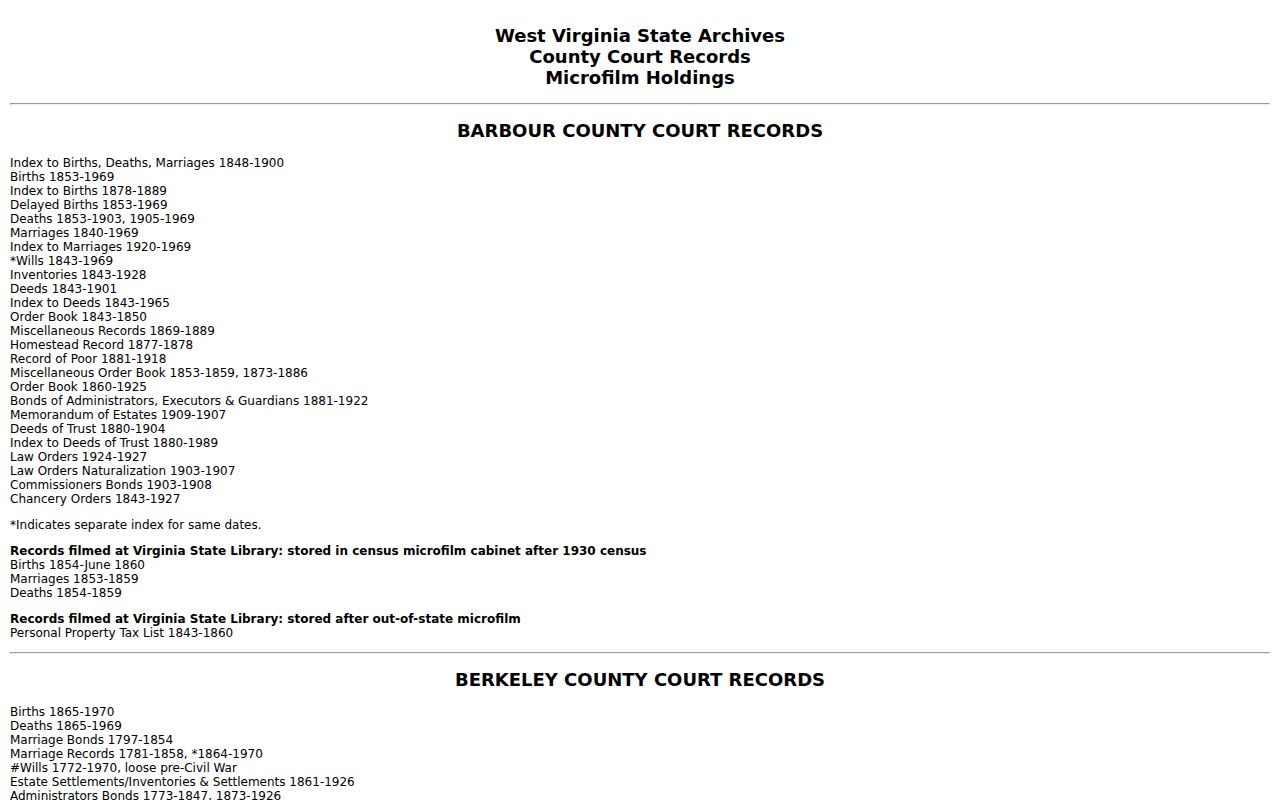
The state finding aid lists Webster deed books for 1877 through 1902, a deeds index for 1888 through 1969, and a land-entry and plat record for 1860 through 1990. The live portal's cutoff is not stated. For a current transfer, begin with the newest clerk index result. For an older gap, use the archive ranges and ask whether the original volume or microfilm is available.
Record the instrument date separately from the recording date. Copy names exactly as written. Add the legal description and volume citation. Every entry should carry its source. A chain log should mark whether that source was an original deed, an index entry, a probate paper, or a later recital, since that distinction keeps a mere clue from being mistaken for the instrument that actually conveyed the interest.
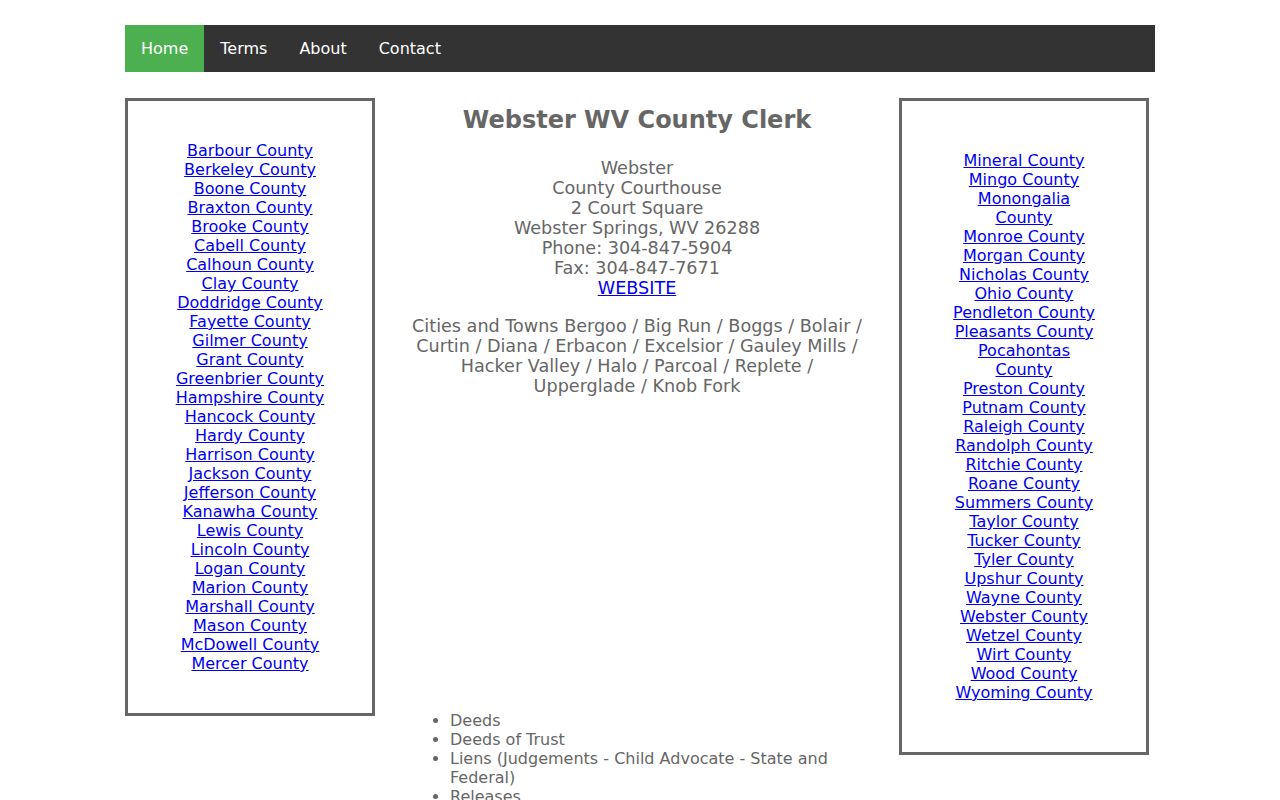
The Webster County Clerk’s indexed land-record portal is the starting point for finding deeds that name earlier owners.
The West Virginia Archives and History finding aid lists the Webster County deed-book and index runs that support research into former owners.
The 1888 Webster County Courthouse Fire
A fire burned the Webster County courthouse in 1888. That date comes from the state archive finding aid. For a deed search, that matters. A missing early book may reflect what survived, not whether a transaction occurred. The finding aid still lists later deed books and indexes. Treat any gap before or around the fire as a research limit. It is not a dead end.
When the chain stops, search the grantor and grantee indexes both ways. Then check the Clerk's vault and the state archive inventory. Look to a probate paper, fiduciary settlement, court order, plat, or land-entry record. Any of these may explain the next ownership step. Note every negative search's date range. A later researcher can then tell what was actually checked.
The finding aid describes several distinct Webster collections. Deed books cover 1877 through 1902. The index spans 1888 through 1969. Wills run 1888 through 1964. Fiduciary settlements run 1888 through 1911. Entries and plats span 1860 through 1990. These ranges overlap but are not interchangeable. A deed book may hold an instrument the index never covered. A plat volume may describe land before any later deed appears.
Walk the Webster County Deed Chain Backward
A grantor conveys the interest. A grantee receives it. The chain rebuilds one filed instrument at a time. Begin at the most recent conveyance, writing down its legal description and parties, then look for the prior instrument under the earlier owner's name. Book and page references plus the description keep the records aligned when parcels multiply or people share a name.
- Take the PID and deed reference from the current IAS card.
- Find the deed, compare the grantee and full legal description, and note its grantor.
- Search that grantor as a grantee in an earlier transfer; test name variants where needed.
- Repeat until the index ends, then move to the archive’s dated deed books or another relevant probate record.
- Grantor / grantee
- The conveying party and the receiving party named in a recorded instrument.
- Chain of title
- The sequence of recorded transfers used to trace who held an interest.
- Legal description
- The land text in the instrument, which can remain useful when streets change.
Not every deed passes the whole parcel. Some deeds reserve an interest. Others name several grantees. Follow the exact estate or fractional interest the document states instead of assuming each name owned the full tract. A description may cite a road, stream, adjoining owner, or old district. Carry that language forward into the next search, since later parcel numbers may cover a subdivision that did not exist when the first deed was written.
Webster County Plats and District Names
A former owner's deed rarely uses today's street address. Instead it may describe a lot, a tract, metes and bounds, or a road or stream. It may also sit in an older district. Webster's early magisterial districts included Fork Lick, Glade, and Holly; Hacker Valley formed in 1876. Later sources use Central, Northern, and Southern. Preserve the district text from each record. Translate it too soon and the trail can go cold.
The archive's Record of Entries & Plats of Land spans 1860 through 1990. A plat can link a town lot or tract to a road, stream, or subdivision name. The Webster County deed-records page explains the Clerk's recording categories and request path. This page follows the chain back through time.
Estate Transfers in a Webster County Chain
An ownership chain in Webster County does not always pass through a sale. Sometimes it moves through an estate. The County Clerk handles probate wills and estate administration. The state archive holds Webster wills from 1888 through 1964 along with fiduciary settlements from 1888 through 1911. Trace the sequence carefully. Look for a will. Look for the appointment of an executor or administrator, a settlement, and any deed the fiduciary later filed. A name may appear on the assessor roll. It may hinge on one of those recorded documents.
Vital records can anchor a date or a family link. They cannot convey land. West Virginia releases birth records after 100 years. It releases death, marriage, and divorce records after 50 years, with confidential fields still protected. Treat a certificate or obituary as a lead only. Then confirm the actual transfer in the probate file and the deed records.
The Assessor is clear on one point. A will or deed must be filed with the Clerk first. Only then can the tax-card owner change. A will names a beneficiary. The probate file, the fiduciary's authority, and any later conveyance show how the land actually moved through the public record. Keep the probate timeline beside the deed chain, never in place of it.
What the Webster County Index Does Not Date
The current public land-record page leaves several questions open. It does not state the online index cutoff. Nor does it list image coverage, account requirements, or copy prices. An empty online result is not a complete search. So ask the Clerk whether a name, document type, or older book needs checking at the counter. The archive inventory helps you target the right record series before you go.
For the current owner of record, compare the newest deed against the assessor's Owner(s) field. For a single copy of an instrument, follow the Clerk's request process. The former-owner route works differently. It records each backward step. And it leaves unresolved gaps visible instead of papering over them with guesses.
How Far Back Webster County Ownership Records Reach
Webster County ownership records reach surprisingly far back. The archive lists deed material from 1877 onward in its microfilm run. Deed-index coverage runs from 1888 through 1969, and land entries and plats begin in 1860. A courthouse fire in 1888 colors how those dates should be read. The county's own origins complicate things too. It was formed from parts of Nicholas, Braxton, and Randolph counties during 1859 and 1860. It then became part of West Virginia in 1863. Earlier land history can therefore cross county boundaries.
A tract that predates Webster County may sit in records filed under an earlier county's jurisdiction. The deed's date and location tell you which courthouse or archive to check. A missing Webster index entry is not proof that an older transfer never happened. Log the jurisdiction named on every source as part of your chain.
Lawful use. Use former-owner research for property history, estate work, and title diligence. Do not use names or addresses to track, harass, threaten, or expose a living person.